
The Montessori curriculum focuses on five main areas:
- Practical Life
- Sensorial
- Mathematics
- Language
- Cultural Exploration
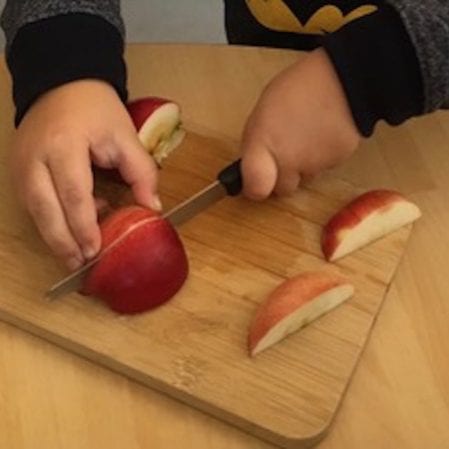 Practical Life
Practical life activities help children care for themselves and their environment and build independence. These experiences nurture concentration, self-confidence, and social skills, helping children become active and engaged members of their families and communities.
Life Skills – Independence – Self-Confidence – Social Skills – Friendships
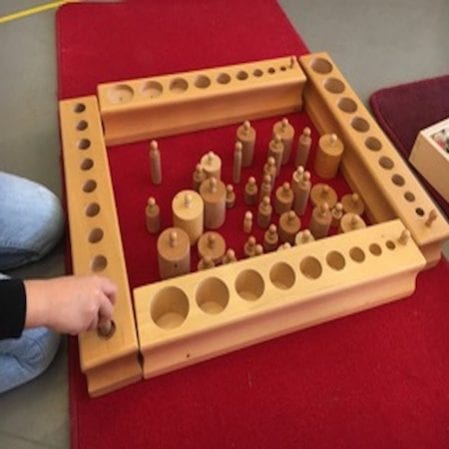 Sensorial
Sensorial materials help children become aware of their senses – sight, touch, hearing, taste, and smell. They begin to compare and contrast the characteristics of objects, such as color, shape, weight, size, length, and thickness. This lays the foundation for future learning and abstract thinking.
Sensorial Exploration – Classifying – Self-Awareness – Logic – Coordination
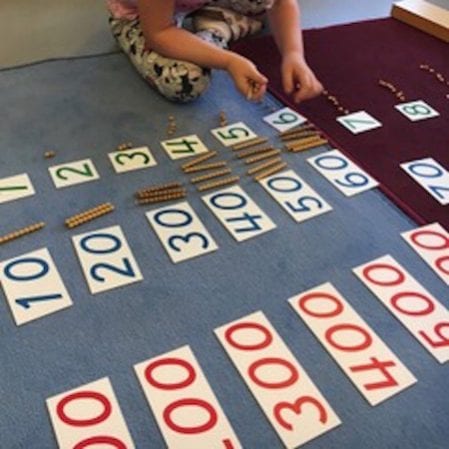 Mathematics
Mathematics materials are logical and methodical. They begin with foundational concepts such as quantity, numbers, and counting. In the second and third years of Montessori kindergarten, children may be introduced to arithmetic – addition, subtraction, multiplication, division, and the concept of fractions. Geometry is part of the sensorial and mathematics areas.
Numbers – Counting – Arithmetic – Geometry – Fractions
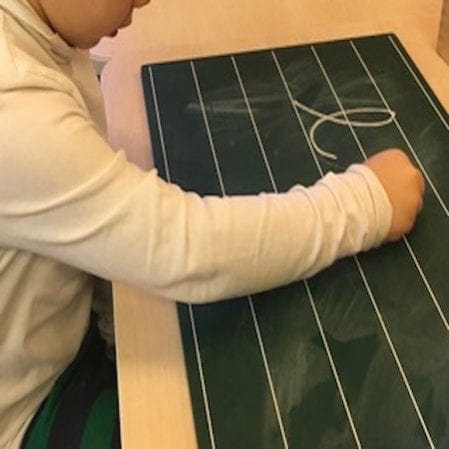 Language
Language development begins with a rich linguistic environment and expanding the vocabulary in English and German (Swiss- and High German). Children aged 3–6 are introduced to letter sounds and learn to phonetically “sound out” words. The focus is on the essential skills for reading and writing. Picture viewing, storytelling, group conversations, and songs are part of the daily routine.
Vocabulary in English, Swiss- and High German – Phonetics – Writing and Reading Skills – Self-Expression
 Cultural Exploration
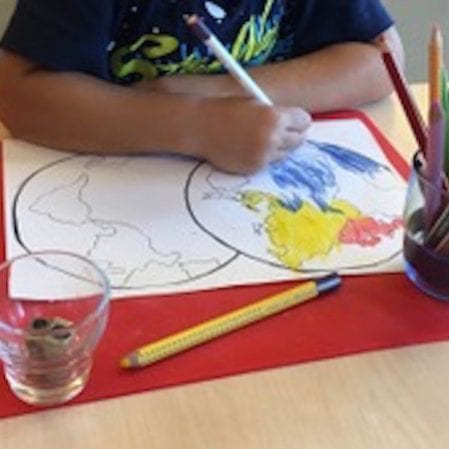
The Montessori prepared environment provides educational materials and experiences in art and craft, music, history, geography, and science – such as biology, botany, experiments, and zoology. These activities support and deepen children’s understanding and awareness of the world.
Creativity – Self-Expression – Social Connection – Awareness of the World